COMMUNITY
Finding Your People
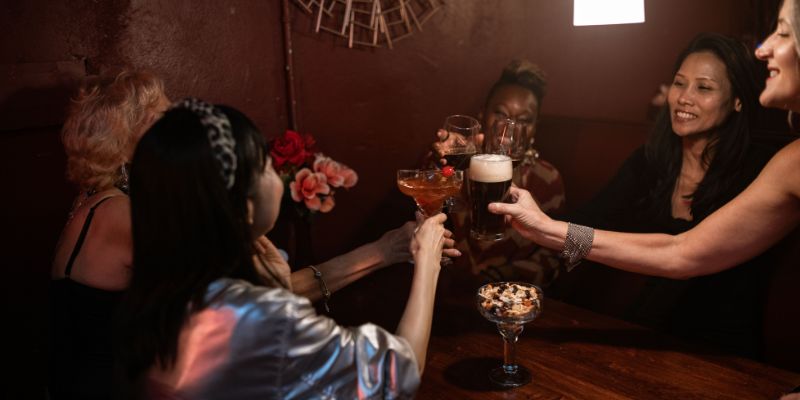
The Right Room Can Change Everything
Some rooms make you perform.
Others let you exhale.
Finding your people is rarely as simple as finding people who like the same things you do. Attraction helps. Shared interests help. A mutual appetite for a certain kind of evening certainly helps. But community is built on something rather less glamorous and considerably more important: how people behave when nobody is trying to impress anyone.
Nairobi can make this complicated.
It is a city of introductions, recommendations and six degrees of separation. Someone knows someone. Someone has a friend who hosts something. A conversation begins on a dating app and ends with an invitation to dinner. An evening out becomes an introduction to another room, another crowd, another version of the city.
This is how communities grow.
Quietly.
Often through people who trust one another enough to make an introduction.
The Lifestyle is no different.
For newcomers, however, the first step can feel strangely theatrical. You may know what interests you without knowing where you belong. You may be curious about kink but not interested in every expression of it. You may enjoy the idea of open relationships without knowing whether you could actually live one. You may simply want to meet people who do not require a three-page explanation before understanding what you mean.
That is where good community matters.
The best communities leave room for uncertainty.
You can arrive alone. You can observe. You can talk. You can leave early. You can decide that a particular room is not your room and nobody needs to be offended by the discovery.
Belonging should not require a performance.
Nor should curiosity make you public property.
Privacy carries particular weight in Nairobi. Family, work, friendship, religion and reputation tend to overlap in ways that make discretion less a luxury than a courtesy. People may be perfectly comfortable with their private lives and still prefer that those lives remain private.
A photograph can change that in seconds.
So can a careless story.
The etiquette, fortunately, is uncomplicated.
Ask before touching.
Ask before photographing.
Listen when someone says no.
Do not treat an invitation as access to everything else.
Do not mistake confidence for availability.
And never make someone regret trusting you with a piece of themselves.
None of this is particularly radical. It is simply good manners, applied consistently.
The more interesting question is what happens when those manners become culture.
A community begins to develop a memory. People remember who is respectful. Who listens. Who arrives with an agenda. Who makes others uncomfortable. Who can take rejection without turning it into an argument.
Reputation travels.
So does kindness.
And perhaps that is why finding your people takes longer than finding a party.
A party needs a door.
A community needs trust.
The distinction matters.
You might meet someone across a crowded room and discover an immediate connection. You might spend three evenings talking before anything resembling attraction appears. You might realize that the person you expected to impress is actually someone you simply enjoy sitting beside.
Not every connection needs to become sexual.
Not every friendship needs to become intimate.
Not every invitation needs to become an experience.
Sometimes the most valuable thing a community gives you is the freedom to be curious without being hurried.
To meet people without owing them anything.
To say yes because you mean it, and no without having to soften the word.
That is how people become your people.
Not because they want everything you want.
Because they understand that you are allowed to want it differently.